Darkly funny
Night-shift banter, crustomer logic, and the strange science of getting dinner to the right—or wrong—door.
Friday Night Specials · A delivery-noir mystery serial
A pizza driver. A printer that knows too much. A city where ordinary doors hide dangerous truths.
Every door opens for a reason.
Free complete episode · Delivery 1 of 12
Nobody ordered it. Cassie still has to deliver it.
Cassie Vega knows how a normal delivery feels. Then Night Slice’s oldest printer sends her beyond the delivery zone with one impossible instruction: bring the pizza to the wrong house. The house next door is already waiting.
Inside this series
Night-shift banter, crustomer logic, and the strange science of getting dinner to the right—or wrong—door.
Each delivery answers one question, opens another, and leaves a light on somewhere ahead.
Fictional streets. Familiar fears. A driver who refuses to look away.
Friday Night Specials · Episode 1
A delivery-noir mystery by Anton Branlin
The first Friday Special printed at 11:47 p.m.
Cassie knew the exact time because she was staring at the clock above the ovens. Eleven forty-seven: too late for coffee, too early to start lying to herself about being fine.
The Friday rush had collapsed into its aftershock. Not quiet. Night Slice never went quiet; it changed species.
Families had eaten. Teenagers had vanished into basements. Lunch felt like a lost civilization. Now the late crustomers crept in from the edges of the map.
As Cassie had explained to Jules, crustomers were not customers.
Customers ordered food.
Crustomers summoned it.
They wrote instructions like dying pirates, paid in damp cash, and guarded gate codes like family curses.
They asked drivers to “come around back, but not all the way back.” They opened motel doors wearing confidence, socks, and nothing else.
Night Slice survived because someone always showed up anyway.
Tonight, unfortunately, that someone was Cassie.
She liked ordinary problems: wrong toppings, missing soda, a customer who believed four minutes was a personal betrayal. Ordinary problems could be counted, corrected, and forgotten. Cassie had built most of her life around problems that fit inside a shift.
The old thermal printer chirped.
Mara Quinn looked up from dispatch. Mara managed the late shift with the emotional temperature of a locked filing cabinet.
“One more,” she said.
“No.”
The printer continued feeding paper.
Mara tore the ticket free. “Large pepperoni. Paid online. Oak Lantern Road.”
Cassie stopped with one hand inside a box of parmesan packets. “Oak Lantern is outside our zone.”
“Not tonight.”
“That is not how zones work.”
Mara slid the ticket across the counter. “Tell that to The Oracle.”
The Oracle was a beige printer bolted beside the newer system. Warren, the owner, insisted that anything still working had earned spiritual seniority.
It had survived three menu changes, two owners, a mouse problem, and one regrettable month of cauliflower crust. The crew treated it like an old elevator: with caution, respect, and no sudden moves.
Cassie read the order.
Large pepperoni.
Extra napkins.
Paid online.
No contact.
Then the note:
PLEASE BRING TO THE WRONG HOUSE.
Jules leaned over her shoulder, read it, and immediately leaned away. “I do not like that.”
“You don’t like speed bumps.”
“They have hostile energy.”
Cassie held the ticket toward the fluorescent light. The ink looked darker than usual. “Mara.”
“I see it.”
“Prank?”
“Drunk customer. Typo. System test.”
“Murder invitation.”
“That is a dramatic reading.”
“It says wrong house.”
“It says bring it to the wrong house.”
“That is not better.”
The pizza reached the end of the oven looking offensively normal. Good bake. Even cheese. No symbol burned into the crust. No tiny haunted handprint. Just dinner.
Mara boxed it and set the black thermal bag between them.
“You want me to send Jules?” she asked.
Jules raised a wet hand from the dish pit. “I would like to vote against my involvement.”
Cassie sighed. That was the problem with being competent. Eventually everyone mistook it for willingness.
She took the bag.
“Check in when you arrive,” Mara said.
Cassie paused. “That sounded almost like concern.”
“Logistics.”
“Right.”
“And concern.”
“Ew.”
“Do not make me regret personal growth.”
Warren called from the office, “Who changed the password?”
“The system forgot him again,” Mara said.
“I heard that.”
Cassie tucked the ticket into her hoodie pocket and headed for the door.
Behind her, The Oracle clicked once.
It did not print. It only made a small, dry click, as if clearing its throat.
Cassie looked back. The green status light blinked. Mara did not look at the printer.
That was the first thing Cassie carried with her.
Oak Lantern lay beyond the last bright blocks, where subdivisions thinned into old houses and long drives.
Porch lights glowed like memories of better decades. Cassie knew the area the way drivers knew every place: by hazards.
The road dip that flooded.
The mailbox shaped like a fish.
The cul-de-sac where every dog believed in collective defense.
The dead zone where customers remembered too late that gates required codes.
The GPS led her past a gas station where a teenager mopped around customers who were not there.
Beyond it, storage units gleamed under security lights like tombstones for furniture. A church sign declared MERCY IS NOT A LIMITED-TIME OFFER.
“Bold claim for an institution with office hours,” Cassie said.
Her phone buzzed in the cup holder.
Mara: Still alive?
Cassie dictated, “No, but the killer has been very polite so far.”
Her phone rendered it: No but the killer has been very polite sofa.
Close enough.
With one hand on the wheel, Cassie tapped two fingers against the ticket in her pocket. She did that when a delivery felt wrong.
Not fear, exactly. More like an itch behind the ribs—the sense that a system had left something out.
Her life was easier when she ignored that itch.
Her life was also easier when she ignored late bills, warning lights, and the part of herself that kept noticing people who needed help.
The houses appeared beneath interlocking oak branches. Number 118 was dark. No porch light. No television glow. A dead plant stood beside the door like a witness who had given up.
Number 116 had one porch light burning.
Not welcoming.
Waiting.
Cassie parked two houses down. Instinct was not paranoia if enough apartment complexes had trained it.
The dashboard clock read 12:03.
She called Mara.
“You there?” Mara asked.
“Unfortunately.”
“Define there.”
“Looking at 118. It is very dark and committed to the aesthetic.”
“And the wrong house?”
“Next door has a porch light.”
“Leave the order and go.”
“Easy to say when you’re not standing inside a possible folk tale.”
“I’m doing the closing deposit while Warren explains passwords to himself.”
From the background Warren said, “The system forgot me.”
Then Mara’s voice changed. “The customer called.”
Cassie looked at the dark house. “And?”
“Older man. Says he lives at 118. Says he never ordered and does not know why he was charged.”
“Refund?”
“Warren is negotiating with a menu.”
“So spiritually, no.”
“Cassie, come back.”
The door at 116 opened.
An older woman stood in the warm rectangle of light, small and straight-backed, silver hair in a knot, cardigan buttoned wrong. Her expression held no surprise.
“Oh,” she said. “Good. They sent the one who reads.”
Mara’s voice sharpened through the phone. “Cassie?”
The woman looked at the thermal bag. “You brought it to the wrong house.”
“That is what the note said.”
Her smile was neither kind nor unkind. It was the smile of a lock recognizing a key.
“Then you are early,” she said. “Come inside before the right house notices.”
Cassie did not move. “I’m not coming inside.”
“Good.”
“Good?”
“The ones who come in too fast usually miss things.”
Enough customers had invited Cassie inside for her to know one thing: hospitality and danger could share a doorway.
She stayed below the porch step, balanced and ready, her keys threaded between two fingers.
“Mara, there is a woman at 116.”
“I heard.”
“She invited me inside before the right house notices.”
A pause. Too long.
“Mara.”
“Ask her name.”
The woman’s hands rested at her waist. Bird-shaped embroidery crossed the toes of her slippers.
“What is your name?” Cassie asked.
“That depends who is asking.”
“The pizza driver.”
“Then Mrs. Wren.”
Mara inhaled.
Mrs. Wren tilted her head toward the phone. “Is that Mara Quinn?”
Cassie stepped back. “Apparently.”
“Tell her I kept the map.”
“Leave,” Mara said. “Now.”
Mrs. Wren descended one step. She looked past Cassie, not at her, and touched the outer seam of Cassie’s hoodie as though brushing away lint.
“The bag stays with you,” Mrs. Wren said.
Cassie caught the faint scent of lavender and old paper. “That is normally how delivery works.”
“No,” Mrs. Wren said. “Normally the food leaves.”
A curtain shifted upstairs at 118.
The porch light snapped on. The front door opened.
An older man stood there in a robe, one hand gripping the frame. Tall, slightly bent, white hair wild on one side.
“Hello?” he called. “Is that my order?”
The obvious move was to walk to the address, apologize, hand over the pizza, and let the store sort out the charge.
But tiny anomalies frightened Cassie before big ones did.
Big dangers announced themselves.
Tiny things were how systems lied.
“Mr. Ellery?” she called.
“Yes?”
“You told the store you did not order.”
His mouth opened, then closed. “No, but they called and said—”
“Who called?”
“The store.”
Mara said quietly, “We did not call him.”
Behind Mr. Ellery, a second shape crossed the hallway. Younger. Faster. Gone before Cassie could focus.
Mr. Ellery looked over his shoulder. His grip tightened.
The whole street seemed to lean closer.
Cassie’s mind became very clean.
Do not approach.
Do not hand over the food.
Keep him visible.
Create a reason to retreat.
“I need to confirm the receipt,” she called.
Mr. Ellery nodded too quickly. “Yes. Of course.”
Mrs. Wren whispered, “He is not the problem.”
“Then what is?”
Her eyes moved toward the upstairs window.
“The person making him answer the door.”
From inside 118, a younger male voice said, “Ask her for the receipt.”
Mr. Ellery flinched.
Not much.
Enough.
Cassie put on the customer-service smile she saved for exact change and people who thought joking was a legal defense.
“No problem,” she called. “Receipt is in the car.”
She backed down the walk—not fast enough to provoke pursuit, not slow enough to invite confidence.
Mara said, “Keep moving.”
At the car, Cassie set the thermal bag on the passenger seat. She kept the open door between herself and the houses.
“Call in a welfare concern for 118,” she said.
“You are leaving.”
“I am. Call it in.”
“I heard a voice. That is not proof.”
“You heard him flinch.”
Mara said nothing.
Cassie watched Mr. Ellery remain beneath the porch light, waiting for instructions from inside his own home.
“You know how normal should look,” Cassie said. “This is not normal.”
“And you are not equipped to investigate it.”
“I can leave. Someone qualified can come.”
A breath.
Then Mara said, “I’m calling.”
Cassie got behind the wheel and locked the doors. The front door at 118 closed. Mrs. Wren’s porch light went dark.
As Cassie reached for the ticket in her hoodie, her fingers found a folded card she had not put there.
Cream paper. Soft edges. Blue ink.
FOR THE ONE WHO READS.
She looked toward 116. The porch was empty.
Inside the card was a hand-drawn map of Oak Lantern and the surrounding streets. Number 118 was circled. Number 116 carried a tiny pizza-slice mark.
Below it:
ASK ABOUT MILO.
Folded into the card was an old thermal receipt.
FRIDAY SPECIAL — DO NOT LOG
Driver: Milo Grant
Large pepperoni. Extra napkins. Paid online. No contact.
118 Oak Lantern Road
BRING IT TO THE WRONG HOUSE.
Status: DELIVERED
Time: 11:47 p.m.
No date.
“Mara,” Cassie said.
“What?”
“Who is Milo?”
The phone went quiet enough to sound disconnected.
“Drive back.”
“Was he a driver?”
“Drive.”
A low engine growl rose beyond the trees. Two cruisers turned onto Oak Lantern without lights or sirens, moving fast and controlled.
Cassie pulled away, watching the houses shrink in her mirror until the branches swallowed them.
On the drive back, Mara gave Cassie one answer at a time.
Every answer had to be pried loose.
Milo Grant had driven nights at Night Slice six years earlier. He noticed wrong addresses and instructions that changed after printing.
He tracked customers who denied calling and repeat orders that arrived under different names. He kept routes, receipts, and times.
“He thought the city had a pattern,” Mara said.
“And you?”
“I thought he needed sleep.”
“What happened at Oak Lantern?”
“He came back quiet.”
“And then?”
“Two weeks later, he stopped showing up.”
The word that cut wasn’t was. It was stopped.
“Did anyone look for him?”
“Yes.”
“Did they find him?”
“No.”
Mara refused to say more over the phone. Fear made her procedural: assign a task, ration the truth, keep moving.
Before Cassie returned, Mara got an update from the police. Officers had found Mr. Ellery alive, shaken, and alone.
He insisted no one else had been inside.
Then he asked whether they had brought his pizza.
The welfare question was closed for the night.
Nothing else was.
Night Slice glowed at the end of the strip mall. The OPEN sign was dark. Inside, mopped floors shone beneath stacked chairs.
The laundromat next door had gone black. The vape shop sign blinked VAPE VAPE VAP, as if losing confidence.
Mara waited at the door. Jules waited in a booth while pretending not to. Warren emerged from the office holding a tablet like it had personally insulted him.
“Did the customer accept the order?” Warren asked.
“No,” Cassie said.
“Which customer?”
“Exactly.”
Mara held out her hand. “Card.”
Cassie kept it. “Story first.”
She reported the delivery cleanly, without color or comedy. When something strange happened, the rule was simple: name each detail exactly.
Jokes came later. Details kept you alive.
She described Mrs. Wren, the touch at her pocket, the moving curtain, Mr. Ellery, the younger voice, the card, the receipt, and the cruisers.
When she finished, Mara looked older than the shift.
Jules pointed at the map. “Is that a treasure map?”
No one answered quickly enough.
“Oh no,” he said. “It is a danger map.”
Warren rubbed his forehead. “Can we not say danger map inside the restaurant?”
“We are closed,” Cassie said.
“That does not improve it.”
“Milo named the printer,” Cassie said.
Jules frowned. “Warren named The Oracle.”
“No,” Mara said. “Milo did.”
The old printer blinked at dispatch.
At last, Mara told the rest. Cassie held an old receipt and had no intention of leaving without the story.
Milo called the impossible orders Friday Specials. He believed they were messages, not mistakes.
Some led drivers to people who needed help. Others led nowhere. He never learned who routed them—or why the old printer sometimes produced tickets the main system never recorded.
“He made a map?” Cassie asked.
“Several.”
“Mrs. Wren said she kept the map.”
“I heard her.”
“You knew her.”
“I knew her address.”
“That is not the same answer.”
“It is the answer you get tonight.”
Cassie almost pushed. Then she saw Mara’s fingers tighten around the dispatch counter.
Competence recognized competence, even when both sides used it as armor.
Under the dispatch light, the hand-drawn streets crossed and recrossed in several shades of blue.
More than one person had added to the map over time. Tiny marks sat beside houses Cassie knew only as addresses: a square, a dot, a half-moon, a slice.
“What do the symbols mean?” Cassie asked.
“I do not know.”
“You are lying.”
“I am withholding.”
“That is lying with a clipboard.”
Mara ignored her. “Milo thought some addresses were safe. Some were warnings. Some changed depending on who answered the door.”
“And 118?”
Mara looked toward the dark front windows. “He never decided.”
Cassie thought of Mr. Ellery gripping the frame. Of the younger voice. Of Mrs. Wren stepping close enough to plant the card without asking. If people could not say what they needed, the system depended on strangers who noticed the small things.
That was the part Cassie disliked most.
Not the printer.
Not the map.
Responsibility.
She had spent years keeping her life narrow enough to manage: work, rent, groceries, sleep when possible.
Other people’s emergencies stayed beyond their doors. A driver delivered the order. A driver left.
But she had seen Mr. Ellery flinch.
Leaving would not erase what she saw. It would only make her the person who chose not to see it.
Mara seemed to read something in her face.
“Do not make this your job,” Mara said.
Cassie looked at the receipt in her hand. “It sent me there.”
“That does not mean you answer.”
“No,” Cassie said. “The door does.”
“What did Milo say after Oak Lantern?” Cassie asked.
Mara looked at the old receipt.
“He said, ‘The wrong house is never wrong.’”
The store became still.
Then The Oracle chirped.
Paper crawled out, inch by inch.
No terminal was active. No order waited in the system. Warren checked anyway and went pale.
Cassie crossed to the printer and tore off the strip.
NIGHT SLICE
ORDER #0000
TIME: 11:47 P.M.
Large pepperoni.
Extra napkins.
Paid online.
No contact.
DELIVER TO:
118 OAK LANTERN ROAD
SPECIAL INSTRUCTIONS:
PLEASE BRING TO THE WRONG HOUSE.
Jules whispered, “The store is closed.”
The Oracle clicked once more.
A final message printed.
SHE READ IT.
DRIVER ASSIGNED:
CASSIE VEGA.
Next door
Cassie follows every instruction—except the last. Then the customer starts texting after the drop.
How do they know she has looked back before?
Stay on the route
Get new episodes, first looks, and release news from Anton Branlin.
One email list. Fiction only. Unsubscribe anytime. Reader privacy.
Friday Night Specials
Twelve linked deliveries. Each order answers one question—and opens another door.
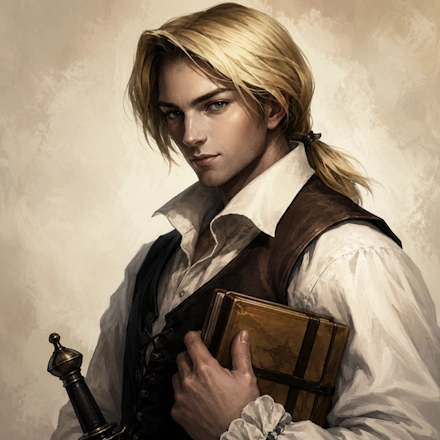
About the author
Anton Branlin writes darkly funny mysteries about broken systems, wrong doors, and ordinary people who notice one detail too many. His first serial is Hot Pizza, Wrong Doors: Friday Night Specials.
Community Specials
Write to Cassie. Share a Pizza Tale. Selected formal submissions may be edited, anonymized, combined, fictionalized, adapted, published, licensed, or sold under the signed submission agreement.
Correspondence
Got a question, reaction, confession, or delivery dilemma? Put DEAR CASSIE in the subject line. Cassie may answer in character.
Write to CassieA regular letter is ordinary correspondence. It will not be published or adapted unless it is also submitted with the signed rights-assignment agreement.
Reader stories
Tell Anton about the order, driver, customer, creature, or door you never forgot. Formal submissions are open to adults age 18 or older.
Review terms & share a Pizza TaleThe signed agreement transfers publication rights, permits substantial editing and adaptation, and provides no payment, royalties, final-copy approval, or guarantee of publication or credit.